




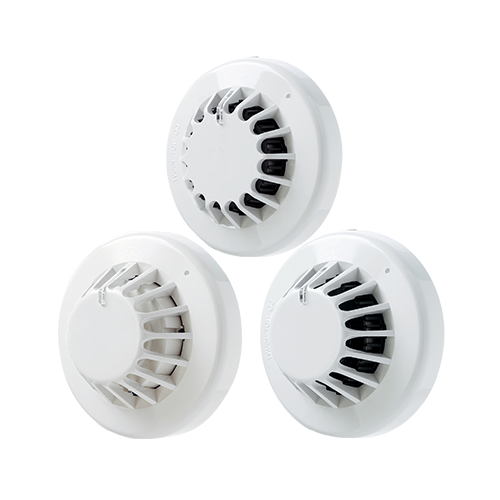
Eaton Cooper CAP320 Smoke Detector: Advanced Fire Safety for Mumbai & India
Protect your property and people with the reliable fire safety of the Eaton Cooper CAP320 smoke detector. Indus Cartel Pvt Ltd, your trusted source for Eaton fire safety equipment in Mumbai and across India, specializes in providing cutting-edge electronic fire and surveillance solutions, including this high-performance cooper smoke detector.
Product Description:
The Eaton CAP320 is a premium intelligent addressable optical smoke detector, designed for exceptional performance in medium to large buildings. Featuring a durable cooper housing and advanced technology, it seamlessly integrates with Eaton’s intelligent fire alarm systems for top-tier fire detection and protection.
Key Features & Benefits:
-
Cooper Housing: The CAP320’s robust cooper housing offers long-lasting performance and corrosion resistance, making it ideal for demanding environments.
-
Smart Addressing: Soft addressing simplifies installation and minimizes errors, ensuring a smooth and efficient setup.
-
Fast Response: Rapidly detects slow-burning fires that generate smoke particles, providing early detection and prompt action.
-
Wide Coverage: Protects areas up to 100 square meters (subject to local standards), maximizing efficiency and reducing the number of detectors needed.
-
Eaton Compatibility: Seamless integration with various Eaton bases, including standard, sounder, and beacon bases, for flexible installation options.
Specifications:
-
Model: Eaton Cooper CAP320
-
Type: Intelligent addressable optical smoke detector
-
Housing: Cooper
-
Area Coverage: Up to 100 square meters (subject to local standards)
-
Compatibility: Eaton CF2000, CF1100, CF3000 series control panels
-
Bases: Compatible with standard (CAB300), sounder (CAS380), and VAD sounder beacon (CASBB394) bases
Indus Cartel Pvt Ltd is your expert partner for all your fire safety needs. Contact us today to discuss your requirements and learn how the Eaton Cooper CAP320 can provide superior protection for your property and people in Mumbai or across India
Specification
Value
Mode
Optical
Area Coverage
100 m² (subject to local standards)
Heat Class
N/A
Alarm Temperature
N/A
Diameter
104 mm (including base)
Depth
33 mm (excluding base)
Depth
45 mm (including base)
Intelligent Addressable Optical Smoke Detector: A Detailed Explanation
An intelligent addressable optical smoke detector is a sophisticated fire safety device designed to detect the presence of smoke particles in the air using advanced optical technology. Far beyond the capabilities of conventional smoke alarms, these detectors incorporate “intelligent” features and “addressability” to provide more precise, reliable, and manageable fire detection in various environments.
1. Fundamental Principle: Optical Sensing
At its core, an optical smoke detector operates on the principle of light scattering. Within the detector’s housing, there’s a specially designed sensing chamber (also known as a smoke chamber). Inside this chamber, two key components are strategically positioned:
- Light Emitter: This component typically emits a continuous beam of light, most commonly infrared (IR) light, though some may use blue or other wavelengths. The light beam is directed across the chamber.
- Light Receiver (Photodiode/Photocell): Positioned on the opposite side of the chamber, the light receiver is designed to detect and measure the intensity of the light beam emitted by the emitter.
How it Works (Normal vs. Smoke Conditions):
- Normal Conditions: In the absence of smoke, the light beam from the emitter travels unimpeded across the chamber and is received by the light receiver with minimal or no scattering. The receiver registers a high, consistent light intensity.
- Smoke Detection: When smoke particles (products of combustion) enter the sensing chamber, they intercept the light beam. These microscopic particles scatter the light in various directions. This scattering effect causes a reduction in the amount of light that reaches the light receiver directly. The greater the concentration of smoke particles, the more light is scattered, and consequently, the less light reaches the receiver.
2. Intelligent Features: Beyond Basic Detection
What sets “intelligent” optical smoke detectors apart from simpler models are their advanced internal processing capabilities and functionalities:
- Microprocessor Control: At the heart of an intelligent detector is a sophisticated microprocessor. This enables the detector to do more than just trigger an alarm; it can analyze data, perform self-checks, and communicate more effectively.
- Signal Processing and Filtering: The microprocessor continuously monitors the light intensity readings from the receiver. It employs algorithms to distinguish between actual smoke conditions and potential false alarms caused by dust, humidity, or other environmental disturbances. This often involves:
- Drift Compensation: Over time, dust accumulation or environmental changes can cause a gradual reduction in the received light. Intelligent detectors can compensate for this gradual “drift,” preventing nuisance alarms while maintaining sensitivity to real smoke.
- Pattern Recognition: They can analyze the rate at which light intensity changes, differentiating between a sudden, rapid drop indicative of smoke and slower, less concerning fluctuations.
3. Addressability: Precision and Control in Systems
“Addressable” is a crucial feature that makes these detectors ideal for larger, more complex fire alarm systems:
- Unique Identification: Each intelligent addressable detector on a fire alarm control panel (FACP) loop is assigned a unique digital address. This means the FACP knows the exact location of each individual detector.
- Loop Communication: Detectors communicate with the FACP over a dedicated loop (usually a two-wire circuit). This allows for:
- Specific Event Reporting: When an alarm or fault occurs, the FACP receives a signal that includes the precise address of the detector in question. This eliminates the need for zone-based identification, dramatically speeding up response times and pinpointing the exact location of an incident.
- Individual Control and Monitoring: The FACP can individually poll each detector, request its status, and even adjust its settings (if the model allows).
- Reduced Wiring Complexity: Addressable systems typically require less wiring than conventional systems, as multiple devices share the same communication loop.
4. Additional Advanced Features:
-
- Detect internal faults (e.g., sensor malfunction, low power).
- Report issues like “dirty chamber” warnings, indicating that dust accumulation is nearing a critical level and maintenance is required, before an actual nuisance alarm occurs.
- Communicate these fault conditions back to the FACP with their unique address.Self-Diagnostics and Fault Reporting: Intelligent detectors are designed to continuously monitor their own operational health. They can:
5. Alarm Activation:
When the intelligent addressable optical smoke detector senses a significant and sustained reduction in light intensity, indicating the confirmed presence of smoke, it triggers an alarm. This typically involves:
- Local Indication: The detector itself usually has a visible LED indicator (often red) that illuminates to show it’s in an alarm state.
- Signal to Control Panel: Most importantly, it sends a digital alarm signal, along with its unique address, to the central Fire Alarm Control Panel (FACP).
- System Response: Upon receiving the alarm signal, the FACP will:
- Activate audible and visual warning devices (e.g., horns, strobes) throughout the building.
- Display the exact location of the activated detector on its screen.
- Potentially initiate other integrated actions, such as shutting down HVAC systems, releasing fire doors, or notifying emergency services.
Intelligent addressable optical smoke detectors represent a significant advancement in fire safety technology. Their combination of precise optical sensing, on-board intelligence, and unique addressability provides highly reliable, accurate, and manageable smoke detection, leading to faster response times and improved life safety and property protection